Every Mother Deserves to Be Heard
Every mother deserves to be heard. Discover why evidence-based care, informed choices, and respectful maternity care can save lives.
Learn what Perinatal Mood and Anxiety Disorders (PMADs) are, who may be at higher risk, and how recognizing the signs can help families find the support they need.
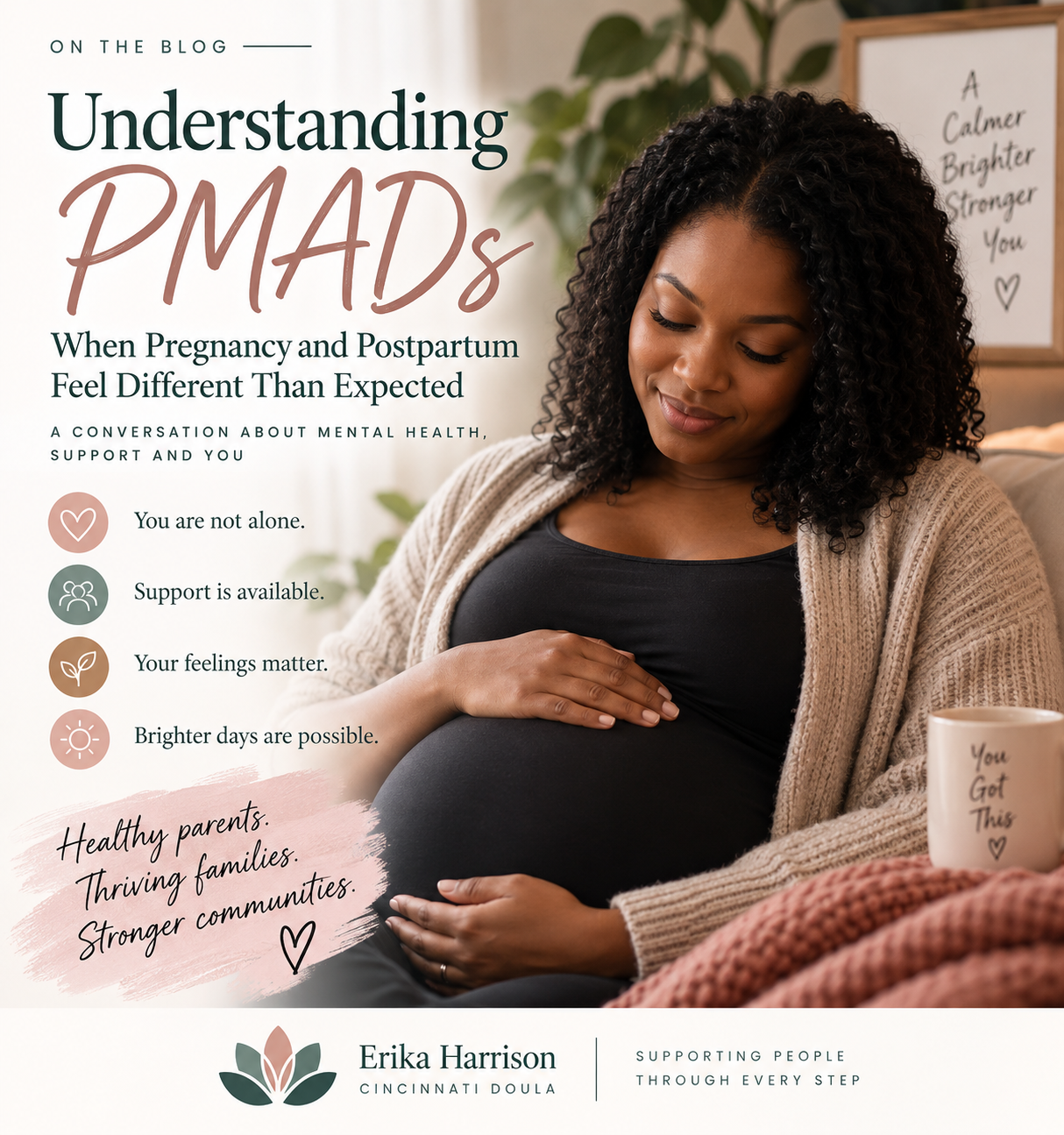
Pregnancy and the months after birth are often portrayed as joyful, exciting times. And they certainly can be. But pregnancy and new parenthood can also bring emotional changes that are confusing, overwhelming, or difficult to talk about.
Sometimes those changes are more than simply having a difficult day.
Perinatal Mood and Anxiety Disorders, commonly referred to as PMADs, are mental health conditions that can occur during pregnancy and throughout the first year after birth. They can include depression, anxiety, panic disorder, obsessive-compulsive disorder (OCD), post-traumatic stress disorder (PTSD), bipolar disorders, and perinatal psychosis.
According to Postpartum Support International, studies show that approximately 1 in 5 perinatal individuals may experience perinatal depression or anxiety.
That is why conversations about emotional health shouldn't begin only after a baby arrives.
We often hear the term postpartum depression, which can make it easy to think that emotional and mental health challenges associated with having a baby begin only after delivery.
They don't.
Depression, anxiety, and other mental health conditions can begin during pregnancy. Some people may have experienced depression or anxiety before becoming pregnant, while others experience symptoms for the first time during pregnancy or after birth.
The American College of Obstetricians and Gynecologists (ACOG) recommends screening for depression and anxiety at the initial prenatal visit, again later in pregnancy, and during postpartum visits.
Recognizing emotional health as part of prenatal care gives families an opportunity to talk about what they are experiencing rather than waiting until they are struggling.
There isn't one single cause of perinatal mental health disorders. Biological, psychological, and social factors can all play a role.
Certain experiences and circumstances, however, may increase someone's risk.
Risk factors can include:
Having one—or several—of these risk factors does not mean that you will develop a PMAD.
Knowing your risk factors simply gives you information. It can help you, your family, and your healthcare providers pay attention to your emotional well-being and create additional support when needed.
PMADs don't look exactly the same for everyone.
Someone may experience persistent sadness or frequent crying. Someone else may feel anxious, irritable, overwhelmed, or unable to stop worrying. Others may notice changes in sleep or appetite, difficulty concentrating, racing thoughts, panic, feelings of guilt or hopelessness, or difficulty feeling connected to their baby.
Some people experience frightening or unwanted intrusive thoughts. Others may feel that something simply isn't right, even if they cannot explain exactly what has changed.
And this is important: you do not have to figure out for yourself which condition you may be experiencing.
If your thoughts, feelings, fears, or changes in behavior are concerning you—or the people who know you well are concerned—talk with your healthcare provider or a qualified mental health professional.
Emotional changes shortly after birth are common. The “baby blues” may include crying, mood changes, anxiety, irritability, or feeling overwhelmed and generally resolve within the first couple of weeks after birth.
Perinatal depression and other PMADs can be more persistent, more intense, and interfere with daily functioning.
You don't need to wait until you are certain that what you're experiencing is “serious enough” before talking with someone.
Reaching out early is okay.
Perinatal mental health doesn't affect only the person who gives birth.
Partners and other parents can experience depression, anxiety, and emotional challenges surrounding pregnancy and the transition into parenthood as well. Postpartum Support International reports that approximately 1 in 10 dads experience postpartum depression.
Partners and family members can also be important observers. Sometimes the person struggling may not recognize how much their mood, behavior, sleep, or anxiety has changed.
Creating an environment where families can say, “I'm having a harder time than I expected,” without shame can make it easier to reach for support.
A doula is not a therapist, psychiatrist, or medical provider, and a doula does not diagnose or treat PMADs.
But emotional support is an important part of doula care.
As a birth doula, part of my role is creating space for families to talk about how they are doing—not only physically, but emotionally. I can listen without judgment, help families think about their support systems, encourage conversations with their healthcare providers, and connect families with appropriate resources when additional support may be helpful.
Sometimes support begins with something as simple as having someone notice, listen, and remind you that asking for help is okay.
Perinatal mental health conditions are treatable, and help is available.
Postpartum Support International (PSI) provides information, peer support, online support groups, a provider directory, and connections to perinatal mental health resources.
PSI HelpLine
Call: 1-800-944-4773
Text “Help” in English: 800-944-4773
Texto en Español: 971-203-7773
The PSI HelpLine provides support and resources but is not an emergency crisis line.
If you or someone you know is experiencing a mental health crisis, having thoughts of suicide or self-harm, or there is an immediate concern for someone's safety, call or text 988 for the Suicide & Crisis Lifeline or call 911/go to the nearest emergency department when emergency medical care is needed.
One of the most valuable things families can do during pregnancy is think about emotional support before it is urgently needed.
Who can you call when you're overwhelmed?
Who can bring a meal, hold the baby while you rest, listen without trying to fix everything, or notice when you don't seem like yourself?
What mental health resources are available in your community?
And does your healthcare provider know about any previous experiences with depression, anxiety, or other mental health concerns?
Preparing for birth involves more than packing a hospital bag and choosing a car seat. Preparing for emotional well-being matters, too.
Pregnancy and new parenthood can bring joy, uncertainty, exhaustion, excitement, fear, and sometimes emotions you never expected.
You don't have to navigate those feelings alone.
Erika Harrison
Cincinnati-based doula supporting families through pregnancy, birth, and beyond.
More to read
Every mother deserves to be heard. Discover why evidence-based care, informed choices, and respectful maternity care can save lives.
Birth is powerful, natural, and sacred. Hospitals can save lives when needed, but birth should not automatically be treated as an emergency. This post explores why doula support matters in protecting autonomy, trust, and informed care.