Understanding PMADs: When Pregnancy and Postpartum Feel Different Than Expected
Learn what Perinatal Mood and Anxiety Disorders (PMADs) are, who may be at higher risk, and how recognizing the signs can help families find the support they need.
From slavery and economic survival to the rise of infant formula—and why human milk still matters today.
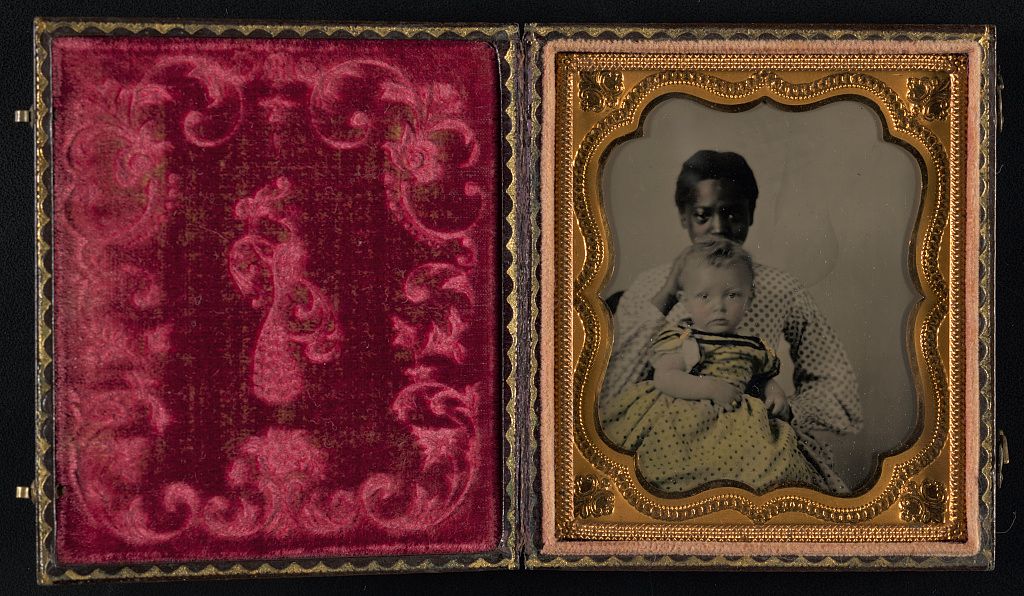
From slavery and economic survival to the rise of infant formula—and why human milk still matters today.
Before infant formula lined grocery store shelves, before breast pumps became commonplace, and long before hospitals established modern feeding protocols, there were women whose breast milk nourished children who were not their own.
They were called wet nurses.
For centuries, wet nursing played an important role in infant care. Some women provided this care voluntarily, others earned a living from it, and still others were forced into the role.
In America, the history of wet nursing cannot be separated from slavery, race, class, motherhood, and the changing value society placed on women's reproductive labor.
It is a history of nourishment and survival. But it is also a history of exploitation.
During slavery in America, some enslaved Black women were required to breastfeed the children of white enslavers.
A woman's ability to produce milk could be treated as an economic asset, much like the other labor enslavers demanded from her.
Some enslaved women cared for white infants while also caring for their own children. Others faced circumstances in which the needs of the enslaver's child took priority.
Imagine the emotional and physical demands placed upon a mother who had recently given birth, only to have someone else control how her body would be used to nourish another child.
Her milk was valuable. Her labor was valuable.
Yet her autonomy, her motherhood, and the needs of her own infant could be disregarded.
Historical research documents the exploitation of enslaved women's reproductive labor, including their work as wet nurses.
This was not simply one mother helping another.
Under slavery, wet nursing could become another form of forced labor, carried out through one of the most intimate functions of a woman's body.
The abolition of slavery did not eliminate the demand for wet nurses.
Throughout the nineteenth century, families with financial resources continued hiring lactating women to breastfeed their infants.
Some mothers were unable to breastfeed because of illness, insufficient milk production, or death following childbirth. Others employed wet nurses because of social expectations or personal circumstances.
For women with limited financial opportunities, wet nursing could provide much-needed income.
Black women, immigrant women, and women living in poverty participated in this labor market, although their experiences differed across communities and regions.
But earning wages did not necessarily mean having meaningful choices.
A woman employed as a wet nurse might have to live in her employer's household or spend long periods away from her own baby.
Some arranged for another woman to care for or breastfeed their infant while they worked.
The result was a troubling contradiction.
A wealthy family's child could receive the nourishment and attention of a wet nurse while that nurse's own child experienced separation, inadequate care, or serious health risks.
The woman providing life-sustaining nourishment was not always in a position to provide that same care to her own baby.
In 1854, the experience of a New York wet nurse named Mary Ennis helped inspire the creation of the Nursery and Child's Hospital.
Ennis had placed her own baby in another woman's care while working as a wet nurse. Her infant was subsequently exposed to smallpox.
The incident drew attention to the dangers faced by children whose mothers had to leave them in order to earn a living breastfeeding someone else's baby.
It also raised a difficult moral question:
What does it mean when the health of a wealthy infant depends upon the separation of a poorer mother from her own child?
The hospital was established partly to address the needs of working mothers and their infants. Yet the broader economic system that made such arrangements necessary remained.
Wet nursing could offer a livelihood, but the cost was sometimes borne by the wet nurse's own family.
During the nineteenth century, another development began transforming infant feeding: manufactured substitutes for human milk.
Families had long experimented with feeding infants animal milk, but these alternatives carried substantial risks, particularly before modern sanitation, refrigeration, and an understanding of infant nutritional requirements.
In 1867, Liebig's infant food, made using cow's milk and other ingredients, entered the commercial market.
Additional manufactured infant foods followed.
By the late nineteenth and early twentieth centuries, improvements in milk handling, sanitation, feeding bottles, and nutritional science made artificial feeding increasingly practical.
These developments gradually changed the demand for wet nurses.
Families who previously might have employed a lactating woman could increasingly purchase or prepare milk-based substitutes.
The change was not immediate, and early artificial feeding was not without danger. Contaminated milk, unsafe water, and nutritionally inadequate preparations could cause serious illness or death.
Nevertheless, infant feeding was entering a new era.
The ability to feed a baby was becoming less dependent on another woman's physical presence and increasingly connected to manufactured products, medical advice, and commercial markets.
An interesting transition occurred as traditional wet nursing declined.
In the early twentieth century, some lactating women began expressing their breast milk and selling it for use by other infants.
Instead of being hired to breastfeed a child directly, a woman could supply human milk that would be bottled and delivered to families or hospitals.
This was particularly valuable for certain medically vulnerable infants.
By the 1930s, traditional wet nurses had largely disappeared from many American institutional and private employment settings, replaced by bottled human milk and increasingly practical artificial feeding methods.
The labor had changed, but human milk remained valuable.
And once again, women's bodies and their ability to nourish infants had become part of an economic system.
More than a century after the introduction of manufactured infant foods, human breast milk continues to play an essential role in modern neonatal medicine.
In hospitals across America, particularly in neonatal intensive care units (NICUs), donated human milk helps nourish some of our most vulnerable babies.
Premature infants, especially those born at very low birth weights, face unique nutritional and medical challenges. Their digestive systems are immature, and they are at increased risk of serious intestinal complications.
One of those complications is necrotizing enterocolitis (NEC), a potentially life-threatening condition that causes inflammation and injury to intestinal tissue.
Research has shown that feeding very premature infants human milk rather than cow's-milk-based formula can reduce their risk of developing NEC.
Whenever possible, a mother's own milk is the preferred source of nutrition for her baby. But sometimes a mother is unable to produce enough milk immediately after birth, particularly when her baby arrives prematurely or she is experiencing medical complications.
That is where donor human milk becomes especially important.
Today, nonprofit milk banks collect breast milk donated by lactating women. Donors undergo health screening, and their milk is tested, pasteurized, and distributed to hospitals according to established safety procedures.
Unlike the coercive wet-nursing arrangements of previous centuries, modern nonprofit donor milk banking is built around voluntary donation, medical oversight, and infant safety.
But there is a remarkable historical connection.
Centuries ago, one woman's milk could sustain another woman's child. Today, that same biological ability continues to protect vulnerable infants—through a very different system of care.
And while infant formula remains an important and sometimes necessary feeding option, the continued use of donor human milk reminds us that advances in technology have not eliminated the unique value of human milk.
The history of wet nursing did not simply end with the invention of formula.
In many ways, it evolved.
From women nursing infants directly, to the collection of expressed milk, to today's regulated human milk banks, the story continues.
Today, families have feeding options that earlier generations could scarcely have imagined.
Breastfeeding, expressed breast milk, screened donor human milk, and regulated commercial infant formula all have roles in modern infant care.
But understanding the history of wet nursing reminds us that feeding an infant has never been solely a matter of biology.
It has also been shaped by access to resources, economic circumstances, medical knowledge, social expectations, and women's ability to make decisions about their own bodies.
For Black women in particular, this history includes generations whose reproductive labor was exploited while their own motherhood was too often devalued.
As a birth doula, I believe this history reinforces an important principle:
Every mother deserves dignity, informed choices, and support in feeding her baby—without coercion, shame, or judgment.
We cannot change the experiences of the women who came before us.
But we can acknowledge their labor, remember their stories, and work toward a future in which mothers and babies are supported together.
Because the history of infant feeding is not simply the history of milk.
It is the history of women, their bodies, their children, and the choices they were—or were not—allowed to make.
Erika Harrison | Cincinnati Birth Doula
Erika Harrison
Cincinnati-based doula supporting families through pregnancy, birth, and beyond.
More to read
Learn what Perinatal Mood and Anxiety Disorders (PMADs) are, who may be at higher risk, and how recognizing the signs can help families find the support they need.
Every mother deserves to be heard. Discover why evidence-based care, informed choices, and respectful maternity care can save lives.